
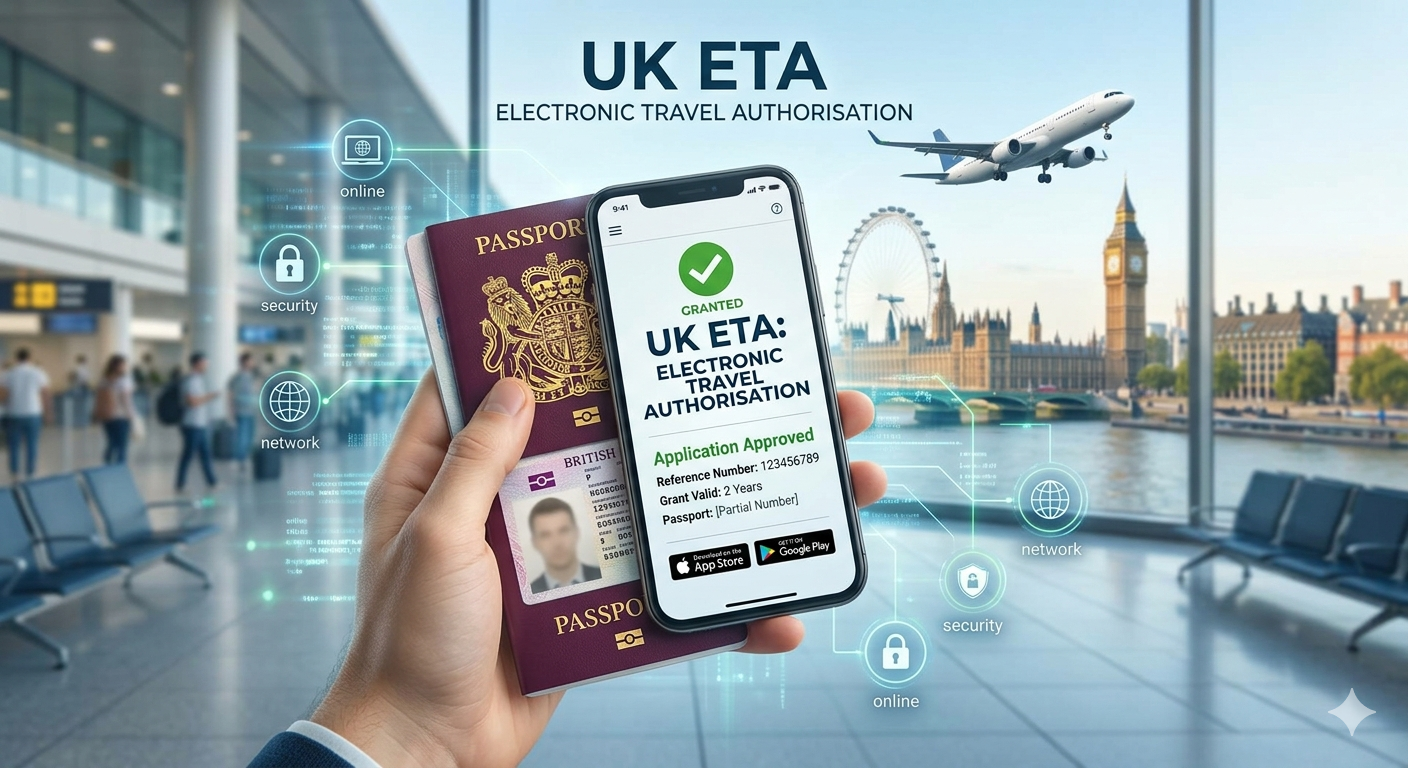
For many years, Britain’s borders were simply defined: entry, either you needed a visa or you fell into the “visa-free” category — citizens of countries like the US, Canada, and the EU —who could only get to the airport with a valid passport.
As of February 25, 2026, the era of unscheduled travel is over. Under the government’s “No Visa, No Travel” policy, the UK has completed the transition to a fully digital border. All travellers, regardless of nationality, will need to obtain an explicit digital permit before they can board a plane, ship or train to British shores.
What is the UK ETA?
An electronic travel authorization is not a visa, but must be entered digitally. It serves as a pre-travel screening tool that allows the Home Office to check the security details of travelers prior to their arrival. While the program was originally implemented in late 2023 for Gulf countries, the February 2026 regulations are the latest and most expansive, expanding visa-free travel to 85 countries—including the EU and the United States—to comply with the law.
Simple ETA options:
Cost: £16 per applicant (including infants and children)
Validity: Up to 2 years or until passport expires.
Application: Multiple access for 6 months.
Processing time: Most decisions are automated and issued within minutes, although the Home Office recommends submitting applications at least 3 working days in advance.
“No Permit, No Travel” Certificate
Previously, permission to enter the UK was usually granted by a Border Force officer on arrival. Now, this responsibility shifts to the carrier upon departure.
If you attempt to board a flight to London, Manchester, or Edinburgh without a valid ETA or e-visa, the passenger system—now integrated directly with the UK Home Office—will flag your status as Unauthorized. Under the 2026 rules, carriers are legally prohibited from authorizing travel without a valid digital permit. There is no way to apply for a free period or “on arrival” visa.
Who needs an ETA?
The 2026 Amendment applies to the vast majority of “visa-free” travelers worldwide. If you do not need a valid visa to travel to the UK for tourism, business, or short-term travel, you will almost certainly need an ETA.
ETA Type Required
| Category | ETA Requirement |
| US, Canada, Australia, NZ Citizens | Mandatory |
| EU, EEA, and Swiss Citizens | Mandatory |
| Visa-Nationalities (e.g., India, China) | Not Eligible (Must apply for a standard Visa) |
| British & Irish Citizens | Exempt |
| Holders of valid UK Visas/eVisas | Exempt |
“Transmission” Phase
One of the key elements of the abandoned 2026 legislation is the impact on transportation. Even if you are transferring from a UK airport only to a third destination, you will need an ETA. If you are transferring to UK passport control to change trains or stay in an airport hotel, the “No Entry, No Travel” rule applies.
Digital Borders Act
The ETA is a cornerstone of the UK’s wider “Smart Border” strategy. By taking immigration checks at the pre-departure stage, the Ministry of Home Affairs aims to:
- Identify potential security threats from the beginning: Look for vulnerabilities or potential security threats before entering the country.
- Corporate Access: Because visitors are screened first, they will have more opportunities to reach the ePassport gate, reducing queues.
- Document upgrades: The modernization of the digital immigration system eliminates the need for photographs ( visa stickers) and paper documents, replacing them with digital documents linked to the traveler’s biometric passport.
Vision Highlights for 2026
The transition has not been without its complexities. Travelers in 2026 must be mindful of several “hidden” traps that could derail their plans.
1. The Dual Citizen Dilemma
A major pain point in the 2026 rollout has been the status of dual British citizens who travel on a foreign passport (e.g., a US or French passport). Because British citizens are legally ineligible for an ETA, their foreign passport will trigger a “No Permission” flag at check-in. To avoid being denied boarding, dual nationals must now travel with either:
-
A valid British passport.
-
Certificate of Entitlement to the Right of Abode placed in their foreign passport.
2. The “3-Day Rule”
While 90% of ETA applications are processed within minutes, the remaining 10% fall into a manual review queue. This can happen due to common names, minor errors in data entry, or historical travel issues. In 2026, the Home Office is firm: if your application is stuck in review, you cannot travel. This has effectively killed the “last-minute weekend trip” for those who haven’t already secured their ETA.
3. Business Travel and HR Compliance
For global companies, the ETA introduces a new layer of compliance. HR and travel managers must now ensure that employees have active ETAs before booking corporate travel. While the ETA allows for “permitted business activities” (meetings, conferences, site visits), it does not grant the right to work. Mistaking an ETA for a work authorization can lead to a traveler being turned away at the border and a potential ban on future entry.
How to Apply: A Step-by-Step Guide
The government has prioritized a “digital-first” approach, making the application process as frictionless as possible.
- Download the UK ETA App: Available on both iOS and Android, the app allows you to scan your passport’s biometric chip and take a “selfie” to verify your identity.
- Fill in Details: You will need to provide basic contact information, address details, and answer a series of suitability questions regarding criminal history and previous immigration breaches.
- Pay the Fee: The £16 fee must be paid by credit or debit card within the app.
- Wait for Confirmation: You will be receiving an email confirmation. Importantly, the ETA is digitally linked to your passport. You do not need to print anything, though keeping a digital copy of the approval email is recommended.